
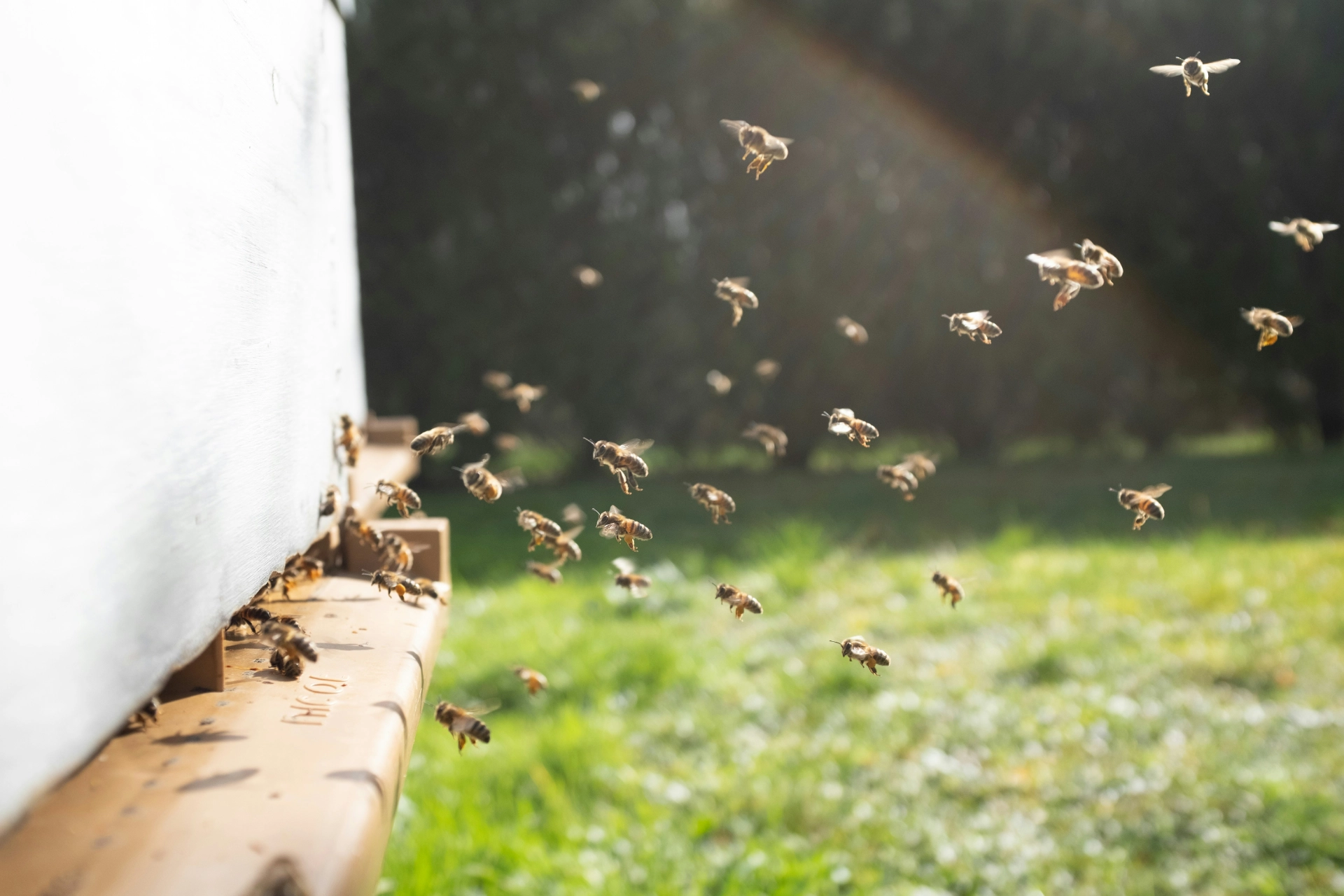
Urban beekeeping is a rewarding hobby that produces great honey at home.
But it does come with some responsibilities — particularly around keeping your neighbours happy and staying on the right side of the law.
Glenorchy City Council supports responsible urban beekeeping as part of a healthy and sustainable local environment. Bees play an important role in pollination, biodiversity and food production, and many residents choose to keep bees as a hobby or for small-scale honey production.
Keeping bees within the Glenorchy municipality is permitted where hives are appropriately managed and comply with relevant Council requirements and Tasmanian legislation.
Rules for urban beekeeping
Residents wishing to keep bees in residential or urban areas must ensure their hives are managed responsibly to minimise impacts on neighbouring properties and public spaces.
Key requirements include:
- Hives must be located an appropriate distance from fences, boundaries and neighbouring dwellings
- Bee flight paths should be directed upward using fencing, screens or vegetation to reduce interactions with neighbours and pedestrians
- Bees must have access to a reliable on-site water source to discourage them from seeking water from neighbouring properties
- Hives must be maintained in a healthy condition to minimise swarming and disease risks
- Beekeepers must comply with Council by-laws and the requirements of the Biosecurity Act 2019 (Tasmania)
Council may investigate complaints where beekeeping activities create unreasonable nuisance, safety concerns or public health risks.
Hive registration
Under Tasmanian law, all beehives must be registered with the Department of Natural Resources and Environment Tasmania (NRE Tas).
Registration helps support:
- Disease monitoring and biosecurity management
- Traceability during pest or disease outbreaks
- Education and support for beekeepers across Tasmania
Beekeepers are encouraged to maintain good hive management practices and stay informed about biosecurity obligations and emerging risks affecting bee populations.
Phone: 03 6165 3777
Beekeeping knowledge and experience
To promote safe and responsible beekeeping, hive owners should have an appropriate level of knowledge and competency before establishing hives in urban areas.
Council encourages beekeepers to:
- Join a recognised beekeeping association or club
- Undertake introductory beekeeping training
- Seek guidance from experienced beekeepers
- Regularly inspect and maintain hives
- Understand seasonal bee behaviour and swarm management
Responsible management helps reduce conflict and supports positive outcomes for both beekeepers and the wider community.
Neighbouring properties
Good communication with neighbours is an important part of successful urban beekeeping.
Before establishing hives, residents are encouraged to:
- Discuss their plans with neighbouring property owners
- Consider the location of outdoor living areas, pools and pathways
- Respond respectfully to any concerns raised
- Take reasonable steps to minimise impacts on surrounding properties
Most concerns can be resolved through open communication and proactive hive management. Where issues cannot be resolved directly, residents may contact Council for advice or assistance.
Talk to your neighbours first.
Bees can cause concern even if they’re not actually dangerous, so have a conversation before you set anything up.
Registration is compulsory.
Under Tasmania’s Biosecurity Act 2019 and Biosecurity Regulations 2022 (in effect since November 2022), all beekeepers — commercial and recreational — must be registered. No exceptions.
How to register.
Tasmania uses an online system called BeeTAS, available at nre.tas.gov.au/beekeeper-registration. Through BeeTAS you can register or renew, update your apiary site details, log hive inspections, purchases, disposals and movements, and upload training certificates and lab results.
Follow the Code of Practice.
The Tasmanian Beekeepers Association has an Urban Beekeeping Code of Practice designed to make sure your bees don’t negatively affect people, animals, or local flora and fauna. You can find it at tasmanianbeekeepers.org.au.
Contact
For further information about beekeeping requirements or to discuss concerns relating to urban beekeeping, contact Council.
Phone: 03 6216 6800
Email: gccmail@gcc.tas.gov.au
このページで何かわからないことがありますか?以下をご覧ください 用語集.